CPSC 110-08: Computing with Mobile Phones
Course Syllabus Fall 2011

Catalog Description

App Inventor for Android is a new open source programming language for Android smart phones. App Inventor is a visual language that enables novice programmers to create powerful mobile applications that interact with the web and with other phones. In this course, students will learn how to access the world of mobile services and applications as creators, not just consumers. They will learn to create entertaining and socially useful apps that can be shared with friends and family. In addition to learning to program and how to become better problem solvers, students will also explore the exciting world of computer science from the perspective of mobile computing and its increasingly important effect on society.

A CS Principles Pilot Course

This course is part of a national project, Computer Science: Principles Project, sponsored by the College Board and funded by the National Science Foundation (NSF). The goal of the project is to develop a new first course in computing that seeks to broaden participation in computing and computer science.

The College Board seeks to develop a new AP exam in computer science to go along with the current Java-based AP exam.

Together with our partner high school, The Greater Hartford Academy of Mathematics and Science, and our partner teacher, Dr. Chinma Uche, Trinity's course is one of several phase-II pilot courses being offered this year.

Our goal this semester will be to incorporate the recommended CS Principles (described here) into a curriculum based on the App Inventor for Android.

Pre/Post Course Student Surveys

As part of our participation in this national project the College Board requires that each student fill out anonymous pre/post course surveys. These surveys elicit interest about your background and about your interest and attitudes toward computing and computer science. At the end of the surveys you are asked to provide identifying information. This information is used to pair your individual pre and post surveys. Once that pairing is made, the data are anonymized.

Here is the Student Pre-Course Survey. Please complete it by September 14th.


Meetings

MWF 11-11:50 AM
Mathematics, Computing, Engineering Center, MCEC, Room 136

Instructor and TAs

Ralph Morelli
MCEC 147
860-297-2220
email: ralph dot morelli at trincoll dot edu
Office hours: MTWF, 1:30 - 2:30 PM or by appointment.

TA: Pauline Lake-Almeida
email: pauline dot lakealmeida at trincoll dot edu
TA Hours: Thursday 9-10 PM or by appointment, MCEC-136

TA: Elliot Bauer
email: elliot dot bauer at trincoll dot edu
TA Hours: Sunday 8-9 PM or by appointment, MCEC-136

Textbooks

  1. App Inventor: Create Your Own Android Apps.
    David Wolber, Hal Abelson, Ellen Spertus, and Liz Looney
    O'Reilly Media, Inc., 2011, (~ $23 new on Amazon)

    App Inventor: Create Your Own Android Apps
    David Wolber, Hal Abelson, Ellen Spertus, and Liz Looney
    Pre-publication Draft, January 21, 2011

  2. Blown to Bits: Your Life, Liberty, and Happiness After the Digital Explosion
    Hal Abelson, Ken Ledeen, Harry Lewis
    Addison-Wesley, 2010 (~ $21 on Amazon or available via PDF Download)

About The Course

Lab Materials

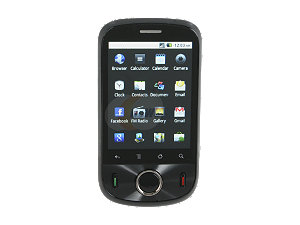
  • Each student will be loaned an unlocked Android Dev phone from a set of phones purchased by the HFOSS Project and the Computer Science Department. The phones cost $200, which is the amount you will be charged if you lose or damage the phone.

  • Students may use their own Android phones if they have one.

  • At some point during the semester pay-as-you-go SIM cards will be purchased for the phones so we can use them for texting and phone calling apps.

    Course Policies

    Attendance

    Attendance is required. We have only 39 class meetings during the semester. If you miss a class for whatever reason---illness, travel, religious holiday, over-sleeping---you must make up the absence by writing a 500 word description of what you missed and posting it on your portfolio within a week of the absence. Except for absences due to serious medical reasons, no more than three such makeups will be accepted. Additional absences will lead to a reduction in your final grade for the course.

    Reading Assignments

    There will regular (almost daily) reading assignments. The
    course schedule lists the required reading together with several study questions. Short, written answers to the study questions must be posted on your portfolios before coming to class.

    Portfolios

    In this course you'll document everything you do on your portfolios. That is, you will post everything -- answers to reading questions, write-ups of hands-on tutorials, written responses to assigned articles, documentation of creative projects -- on your personal portfolio page. The portfolios will promote sharing -- you can learn from each other -- and will constitute a full record of what you've done in the course that you can refer back to during and after the course and share with your friends and family. The portfolios will be graded every couple of weeks, approximately 7 times, during the semester. The lowest portfolio grade will be dropped.

    App Inventor Projects

    There will be three (3) creative projects in which you will work in pairs to create a mobile app that you propose (pitch), design, and implement.

    Quizzes and Exams

    There will five announced quizzes and two hour-long exams given during the semester. The lowest quiz grade will be dropped.

    Oral and Video Presentations

    There will be approximately three (3) oral and/or videotaped presentations of your creative projects during the semester. If time permits, these will be given in class. Although it may be necessary to some of these presentations in one or two evening sessions during the semester.

    Late Work

    The deadlines posted for assignments -- reading questions, homework assignments, creative projects -- are strict deadlines--once the date passes no credit will be given for work posted after the due date.

    Grade Determination

  • Homework and Reading Assignments -- 20%
  • Quizzes -- 20%
  • Exams -- 20%
  • Creative projects -- 40%

    Acknowledgements

    Thanks to
    Dave Wolber, Professor of Computer Science, University of San Francisco, who has been teaching App Inventor to his students since 2009, for his guidance and for sharing his textbook and course materials.